Hurricane Helene tore through western North Carolina in September 2024, unleashing catastrophic flooding and landslides. Roads washed out, homes were destroyed, and widespread outages left many without power or phone service. The storm killed 107 people in North Carolina and caused nearly $60 billion in damage, making it the worst storm in state history.
In Black Mountain, the loss of power and cell service had an unexpected effect. Residents of one neighborhood who had barely known each other began sharing meals around a small grill and spending hours in conversation. Those relationships lasted long after service returned. Two years later, neighbors still stop for long talks and gather regularly. “Helene quickly turned our neighborhood into a family,” one resident wrote.
Disconnecting to Connect
Today, people are learning the same lesson the hurricane taught the residents of that Black Mountain neighborhood. Many are now paying to have their phones taken away.
At Offline Club gatherings, guests surrender their devices at the door and spend the next few hours disconnected. In the absence of technology, many describe a sense of freedom. With no pinging notifications or incoming calls, attendees devote time to quiet activities like reading or solving puzzles. Then, they just socialize. One organizer described the goal as helping people “swap screen time for real time.”
The appetite for unplugging is spreading beyond organized detox events. Phone-free restaurants are gaining popularity, and smartphones are being swapped for flip phones devoid of social media apps. Many are also building regular offline periods into their daily lives, from phone-free walks to screen-free Sundays. “People aren’t trying to erase technology from their lives. They’re looking for more say over when it gets their attention,” writer Ashley Lynch explains.
In many cases, the choice to limit device use is also a way to safeguard mental well-being. Studies show that taking breaks from social media or mobile internet can reduce symptoms of depression and anxiety, improve sleep, strengthen social connection, and support greater self-discipline.
That desire for relief from constant digital noise reflects a need God addressed at creation. “Remember the Sabbath day, to keep it holy. Six days you shall labor and do all your work, but the seventh day is the Sabbath of the LORD your God” (Exodus 20:8–10).
How could technology be impacting our relationships with God and others on the Sabbath? And what might change if we rested not only from physical work, but also from our devices on His holy day?
An Uninvited Guest
In Luke’s Gospel, we see a clear parallel for how technology can creep into our time with the Lord. The Bible specifically states that when Jesus visited Mary and Martha’s home, it was Martha who “welcomed Him into her house” (Luke 10:38). Yet while Mary sat at Jesus’ feet and gave Him her undivided attention, Martha was distracted and troubled by worldly concerns (Luke 10:39–40). Her intentions were good, but her efforts to serve Jesus prevented her from fully receiving the blessings He sought to impart.
Much like Martha, we may welcome the Lord each Sabbath while carrying along an invasive third party. Of course, technology can be extraordinarily helpful and has helped God’s Word reach millions, which may be why its distractions are so easy to miss. Research suggests that the mere presence of a smartphone, even without active use, can reduce attentional performance and consume cognitive resources. Digital Bibles can pose a similar problem because the presence of other apps leaves Scripture one tap away from interruption.
God set apart the Sabbath as time for us to grow in our relationship with Him. By setting aside time each week away from the hubbub of online presence, we can discern His still small voice and remember that our worth and purpose come from trusting Him. As one article states, “giving exclusive and undivided attention within that specific time is an expression of priority.” As we do so, we can more fully claim the promise: “If you turn away your foot from the Sabbath, from doing your pleasure on My holy day … then you shall delight yourself in the LORD” (Isaiah 58:13, 14).
Unfiltered Fellowship
The Sabbath was created not only to grow our connection with God, but also to nurture our relationships with those around us. Leviticus describes the seventh day as “a Sabbath of solemn rest, a holy convocation” (23:3), emphasizing the necessity of gathering together. Jesus set an example for us throughout His ministry, spending Sabbath in the synagogue and in people’s homes, teaching and healing. His life illustrates that the Sabbath was designed for meaningful engagement with others, not private withdrawal.
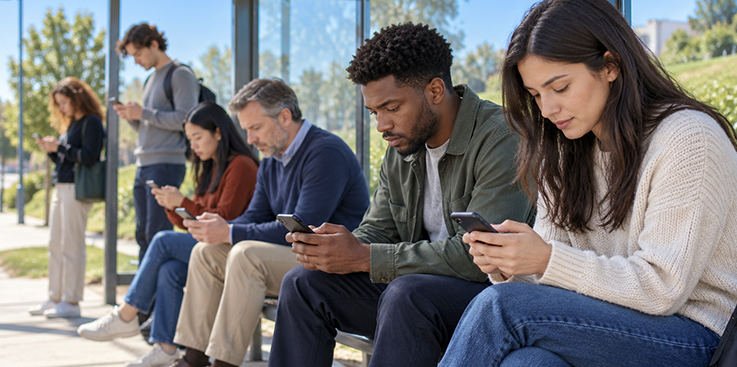
That communal purpose can be harder to sustain when our gazes are fixed on a screen. A study of online religious services found that regular in-person worshipers were far more likely than virtual participants to report feeling strongly connected to fellow worshipers. Though digital access offers many opportunities to learn and communicate with others, it can hinder us from being fully present and aware of the needs of others.
In Acts, we see a portrait of the fellowship God wants for us: “Now all who believed were together, and had all things in common … praising God and having favor with all the people” (Acts 2:44, 47). Their faith was lived out in shared worship and close personal connection. This is particularly vital on the Sabbath, and it’s why the apostle Paul urges against “forsaking the assembling of ourselves together, as is the manner of some, but exhorting one another” (Hebrews 10:25).
Technology can still have a place on Sabbath when it genuinely serves a purpose. The challenge is keeping it from shutting out the people and experiences the day gives us time to enjoy.
Offline Presence
Hurricane Helene showed one neighborhood how quickly abiding relationships can be forged when digital distractions fall away. We don’t need to be beset by disasters to discover that truth. The Sabbath gives us the opportunity every week.
This Friday evening, consider which devices you can rest from. Silence nonessential notifications, keep your phone out of reach during worship and meals, use a printed Bible, and plan time that puts people before screens. These simple steps can help you more fully experience God’s intended Sabbath rest and enable you to “taste and see that the LORD is good” (Psalm 34:8).
To learn more about the blessings the Sabbath offers, read “7 Promises of the Sabbath.”